Wednesday, May 26, 2010

Some "feels good" wines

We went back home for 3 days and he was great to be in sunny Paris. After having lunch with a good friend, I realised how I missed the French bistrots where you can eat some simple but delicious food along nice wines without having to pay $80 for the bottle.

So to go along the kidneys, we choosed a 2008 Domaine Richaud Cairanne. Marcel Richaud is a famous name in the Cotes du Rhone appelation. A few times his wines have been refused by the INAO because of a lack of tipicity. Hum....lack of tipicity? I think they're were just too good and different from many crappy CdR so the INAO had to refuse them. Anyway, Marcel Richaud is a fantastic winemaker respecting the terroir and grapes. Manual harvest, indigenous yeast, no acididification or chaptalisation...you get the picture. This 2008, while young (obviously) was perfect along the kidneys and entrecote. Totally open and showing very well. Floral and mineral on the nose with garrigue and licorice. Mainly dark fruits and earthy notes. It's already balanced and will only improve with time. The 14.5% are well integrated. You want to taste where the wine comes from and with the 1st sip you know you are in Provence.

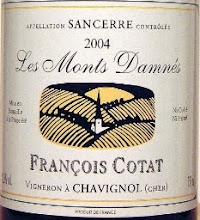
Along the turbo for dinner, a superb 2008 Francois Cotat, Les Monts Damnes was sacrificed. I say sacrificed because Francois' wines needs 10 years. But boy, it's too hard to wait that long! As predicted, this was really tight. Wet rocks and cassis leaf. Powerful on the palate. Not much fruit right now but I love the acidity and light mineral notes. As usual it is never a disappointment with Francois!This needs to go to sleep for a few years.


Different register the next day with a Jérôme Prévost La Closerie Les Beguines (LC07) and a 1999 Clos Rougeard.

Jérôme Prévost started doing his champagnes in Selosse's cellar because of a lack of...cellar! His 1st vintage is 1998 as he was previously selling his grapes.
He harvests at a high degree of ripeness in order to avoid chaptalization and fermentation takes place with indigenous yeasts in 450- to 600-liter oak barrels. While never a declared vintage champagne, he uses grapes from a single year and the code on the bottle (LCxx) indicates the millesime. The 2007 is a great extra brut. 100% pinot meunier from old vines, there's not really one fruit coming out but instead a complex array of aromas. Impeccable balance, it made me think of a white burgundy with a touch of cognac oak like.You can definitely see the Selosse influence here even though this champagne is not as vinous. Took a little time to open up. Might be a good idea to decant it for 20-30mn.

The Clos Rougeard was no surprise: it was just awesome. A little decanting was in order and this Clos Rougeard was in a soft spot. Intoxicating and complex nose with a touch of cedar, lots of tobacco, a touch of bell pepper. All that is backed up by a good and fresh fruit. Round, it shows more earthy notes on the palate with a long finish. The balance is where it should be with a nice acidity. It somehow reminded me a little bit of a Bordeaux with more acidity and earthy notes. Simply delicious and à point.


How can you not feel good after wines like this?!

Sunday, May 23, 2010

Why oh why?!

Yes, that's the question I asked myself when we finished our latest blind tasting. I'm not sure why and how we came up with that theme, maybe we were drunk or high at the time but we decided to taste blind some Russian River Valley pinots against some Sonoma Coast pinots.
Well you heard it all: cool regions, micro-climate bla bla bla... This is total BS. It might be a cool climate if you compare it to Namibia but when you actually drink those wines, there's absolutely nothing cool about it.
Now I know I should not generalize with only the 5 bottles we had during the tasting but this goes beyond this tasting. Hardly do I remember any pinot from those AVAs that gave me goose bumps.

Anyway, we tasted blind the following 5 pinots:

1998 Martinelli, Martinelli Vineyard - Russian River Valley
Pale cherry core, hazy. Pretty nose with tobacco, red cherry and strawberry along earthy and light licorice notes.Full body, ripe fruits on the palate which matches the nose with additional violet notes. Coarse, some heat on the finish.

2008 Rivers-Marie - Sonoma Coast
Very ripe nose: cherry and a mix of quetsch and prunes. Med body, round and again those very ripe fruits on the palate. Very candy like. Really boring right now and is more similar to a cheap syrah (not shiraz) than a pinot noir.

2006 Freeman - Sonoma Coast
Lighter color than the Rivers Marie. Started pretty well with some enjoyable red cherry (also clafouti), herbs and licorice notes. Balanced, interesting cassis leaf notes. But with air, it became heavy with a sweet fruit in a wine lacking acidity. Another pass...

2005 Joseph Swan, Saralee's vineyard - Russian River Valley
Med cherry core. Smoke, grenadine and cherry, blood orange with a touch of oak and plum. Med body, round, balanced, good acidity. More dark cherry but the fruit is a little candied. Some heat on the tart finish. While OK and not over the top, this is boring and too easy. Based on this bottle, I don't see this bottle age very long.

2007 Merry Edwards - Sonoma Coast
Well, good I knew we were tasting pinot here cause it smells everything but pinot. Oh, and the palate as well. I was shocked to see this was Edwards. I always read good things on her, but this bottle was everything I don't want in my pinot. Oh well...

The verdict was clear for all of us: a big disappointment.
We had pretty big names of none of those pinot showed something attracting, at least to us.
Where is the sense of place? terroir? elegance? class?
It looks as the producer is definitely more important than if your pinot is from Sonoma Coast or RRV. They all show sweet fruit, lack acidity,
Among those 5, the Swan and Martinelli showed an interesting nose but then over ripe palate. The Swan being the only wine below 14%...

Well, let's go back to Burgundy, and fast!

Monday, May 17, 2010

A white that was not supposed to age...

Who said there are no wines good enough to age 15-20 years in the Languedoc? Well Mr Guibert would certainly not tell you such idiotic comments, that's for sure!

If you've seen Mondovino, you certainly know Aimé Guibert. Right after watching the movie, I loved this character, full of emotions and history. I honestly don't care to know the truth about the Mondavi affair in Aniane. What I know is I liked what transpired from Mr Guibert even if I'm conscious that there's much more to this story than what we will ever know.

Anyway, Mas Daumas Gassac, located in the Vallée d'Aniane in the Languedoc, vinified the white Daumas Gassac for the 1st time in 1986 with some Viognier, Chardonnay, Petit Manseng and Chenin Blanc as main grape varieties. The red had been released for the 1st time 8 years earlier in 1978.
It takes a lot of courage to settle in a relatively unknown region and terroir with the hope to make great wine. But it certainly paid off.

The vineyard benefit from a cool micro climate (500m altitude) with poor soil with a very good drainage.
The complexity of the white wine comes from the multitude of cepages used. If as I already mentioned, the Chardonnay, Petit Manseng, the Chenin Blanc and Viognier represents up to 90% of the wine, the remaining 10% are a patchwork of very old varietals from Madeira, Portugal, Yemen...

No machines used here of course for picking.
Macération pelliculaire at 10°C for between five and seven days, followed by fermentation in inox vats at 20/25°C for three weeks. It is then filtered through fossilised seashells before being returned to the vats.


So last Friday, we opened a 1996 Daumas Gassac Blanc.The Guibert describes the 1996 vintage as unique in the Languedoc: a tropical one. Picked from September 9 to 13th, the temperature being over 35C. The least we can say is you can totally read the vintage in the wine! A touch of RS, honey notes with hay, apricot and pear. Somehow it reminded me of a 20 years old Spatlese on the nose. Almost oily and very round, it still shows a perfect balance with enough acidity to lift the wine. Very long finish and very complex. A beautiful wine.

I have to admit that I love wines that shows the vintage, poor or good. I don't want the same wine year after year and thankfully Mas Daumas Gassac manages to integrate the millesime in their wines.

Wednesday, May 5, 2010

Can it get any better?

I've never been a big believer in pairings. While there are certainly some food to avoid with certain wines (or vice-versa) in general the wine works out pretty well with any food (yeah right, of course don't try a stupid 17% Zin with a delicate fish...but you get the picture).
Maybe on one or two occasions did I found the wine-food pairing really compelling. Like for example, that crazy 1959 Rivesaltes from Domaine Vila with a chocolate tart. In this case, all the flavors were in symbiosis. I remember thinking, wow, this is pure heaven. They are meant for each others ! But, really, how many times has it happened? Yes, exactly, not that often...
But this week, a Macle miracle happened...


Two months ago, while in New-York, we bought some 4 years old Gouda. So when I saw the 2005 Cotes du Jura Jean Macle at Crush, I immediately thought about that Gouda...and boy what a pairing ! The nuttiness and pungent flavors of the aged gouda completed the curry and oxidative notes of this spectacular Cotes du Jura. What I loved in this wine is that the oxidative notes are not over the top. The wine is fresh, nice fruit and very complex. To give you an idea of the acidity in that wine, the pH is 3.06 !!

This wine is made from 85% chardonnay and 15% savagnin grown on a calcareous clay soil. Rather young vines (20 years), no insecticides, pesticides...Totally natural...Both the alcoholic fermentation and the MLF are done in cuves. Then the wines are aged separately in pièces (i.e. 228l barriques) usually for a minimum of 2 years (even though the 2005 was raised for 18 months sous voile). The pièces are not filled to the top and develop the famous voile (thin yeast layer on top of the wine).

The chardonnay and savagnin assemblage (blend) is made after the Macles taste every barrels. It is very interesting to note that several bottlings (mise en bouteille) occur during the year. The code on the bottle indicates which bottling it corresponds to (on my bottle, code was L.07.05).

I'm looking forward to taste the 2007 version since Laurent (Mr Macle son) vinified the wine in a non oxidative style. But what will we drink then with our gouda? :-))

Monday, May 3, 2010

A dinner with a Master of Burgundy: Clive Coates

Clive was staying with us at home for 3 days in Chicago. I set up a dinner in his honor last Tuesday, even though it was a root day :)

Clive passed his Master of wine in 1971 and has been a wine merchant for a long time. The, as we all know, he wrote what is, in my opinion, The reference, the Bible of Burgundy: Côte D'Or: A Celebration of the Great Wines of Burgundy.


A revised edition, with a new section on Chablis has also been released: The wines of Burgundy.
Those 2 books are the only ones I need when I'm looking for any information on Burgundy.


We asked our friends who were joining the dinner to bring a bottle of Burgundy to share.

A few of the wines we had:


  • 1990 Dom Perignon

  • 1998 Pol Roger, Winston Churchill

  • 1990 Clos de Tart

  • 1998 Chambertin, Rousseau

  • 1998 Chambertin Clos de Beze, Bruno Clair

  • 1998 DRC Romanee St Vivant

  • 2001 Confuron-Cotetidot, Gevrey Lavaux St Jacques

  • 2001 Montrachet, M Coutoux

  • 2002 Corton Charlemagne, Girardin

  • 1996 Dugat Py, Petite Chapelle

  • 1995 Chambolle Charmes, G Barthod

  • 1999 Corton Renardes, M Delarche

  • 1996 Chevalier Montrachet, Leflaive

  • 2000 MSD, Dujac

  • 1991 Gouges, NSG Vaucrains

  • 2001 Chambolle, Mugnier

  • 2003 Leroy, Savigny Les Ratausses

  • 1997 Mikulski, Meursault Genevrieres

  • 2006 Simmonet Febvre, Les Clos

  • 2000 Corton Rognet, Ambroise

  • 2003 Charmes Chambertin, N Potel

  • 1985 Albert Morot, Beaune Bressandes

  • 1988 Albert Morot, Beaune Bressandes

  • 2007 Pernand Les Combottes, Rapet

  • 2002 Chassagne Les Vergers, Jean-Marc Pillot

  • 2007 Puligny Les Luzins, Marc Colin

It was a pleasure to drink with Clive and listen to his stories.


A great dinner with friends, bottles being passed around....exactly what wine is about.
Among Clive favorites, a pair of 1998s: Rousseau Chambertin and the Bruno Clair Clos de Beze and a wonderful and elegant 1990 Clos de Tart. Indeed, simply awesome wines!
But plenty of other wines showed very well, despite the root day: the 95 Barthod, the 2001 Confuron Cotetidot and a wonderful 1991 Gouges Vaucrains now at its peak.
2 big disapointments: a corked Dugat-Py and an unspiring Montrachet from Coutoux...oh well, even this was not enough to spoil a great evening!


The next day, Clive proposed to cook dinner for us. How can you say no to someone with culinary training?!!
A very good dover sole, enjoyed with Clive, my wife and 4 other friends. After the previous night fest and also to pair along our dinner, refreshing whites were in order.
We started with a perfect Michel Arnould Reserve Champagne.
Then we moved to a beautiful, balanced 2007 Clos des Briords VV Muscadet from Marc Ollivier. Mineral,refreshing. Very fine.

We quickly forgot a corked 2004 Raveneau MontMains (although I wonder why this has to happen with a Dugat-Py and Raveneau and not with an Argentinian malbec..). To replace it, we opened a great 1996 Chassagne Montrachet Les Champgains from Michel Niellon. At its peak now.
Also opened a 2002 Excelsior Clos du Poyet muscadet from Luneau-Papin. I have to admit that this wine did nothing for me.
A 2002 Deiss Engelgarten impressed me with its minerality and focus and a very good 2002 Dr. Bürklin Wolf Ruppertsberger Gaisböhl Riesling trocken.
Because no meal is complete without a red wine (not really but that's the only lame excuse I found), we opened a 1995 Dominique Laurent Volnay Caillerets with now the oak integrated and an absolutely wonderful 2004 Chambolle Musigny from Fourrier.

Beyond the wines which were very good, the company was even better. Really, what more can you ask than having good friends, good laughs when sharing good wine and food.
It was a delight to listen to Clive stories, parts of his life, Burgundian adventures...and much more!

Monday, April 26, 2010

What time is it? It's cassoulet time!

Well of course I could have answered It's Boss time! Any Sprinsgteen fan would have understood but this time, cassoulet was the subject (evn though I'd suggest listening to Springsteen while having cassoulet, can't beat that!).

Rumor has it:
During the siege of Castelnaudary during the “100 years” war (1337 – 1453) was cooked the very first beans “estofat”.
Gathering all the leftovers available, the cooks from this ancient time prepared a unique dish made with beans and various meat pieces in order to give strength and power to the warriors defending the city. After that marvelous lunch, …and a bit of wine too…, the warriors charged the British army who immediately left in panic and, according to legend, did not stop running until they arrived to the coastal line of the Channel.

The Recipe, straight from the official website of Castelnaudary (which is between you and me the BEST place to eat cassoulet)

Ingredients

-350 to 400g of dry Haricot Lingots
-2 legs of duck or goose confit, cut in two pieces each
-4 pork sausages of 80g each
-4 pieces of pork meat, 50g each. Preferably leg, shoulder or belly
-250g of pork skin, of which half will be used after the cooking for the final assembly
-A little of bacon
-1 spoon of concentrated tomatoes
-1 poultry carcass, or few pork bones
-Onions
-Carrots
-Garlic

You see where I'm going: we decided, before Spring/Summer arrive in Chicago to fest with a home made cassoulet.


You start with covering the bottom of the dish with fat


Then you add more pork belly because you can never have too much


Gaetano home made duck confit


The final result


Cassoulet has nothing fancy and is not supposed to. On the opposite, this is a dish to be shared with friends and family.
Great evening with friends, food and wines.


We started with 2 champagnes although totally different. The Pierre Peters is simply great, vibrant, mineral, balanced. All you can ask for. The Jean Vesselle Reserve is easy to drink, not overly complex but crisp and balanced.


A nice mix of quite different wines followed to pair with the cassoulet.

The 2005 Eddie Feraud Châteauneuf-du-Pape was a nice surprise after trying a 2006 that I did not like.Nice nose with plenty of garrigue, prune and light, fresh licorice.This is certainly ripe but manage to stay balanced despite a rather low acidity. Nice fruits on the palate with rich strawberry and cherry with prune and other dark fruits. Interesting earthy notes. Hint of minerality as well. It drinks very well right now.
The 2004 Domaine Laffont Madiran Erigone had a masculine nose with meaty notes along leather, plum and chocolate. Full body, firm tannins, this is a wine which needs food. Plenty of burlat cherry (somehow reminds me a little bit of bandol). Nice wine, not overly complex. No rush to drink.
A very good 2006 Chateau de Mayragues Gaillac, 50% Duras and 50% Syrah, very peppery and bright juicy fruit. Balanced and fresh. Almost gamay like fruits.
Also interesting to try a 2001 Bodega Catena Zapata Nicolás Catena Zapata (blend of malbec and Cab Sauv). Very young but also very ripe and very simple. Not really my cup of tea but it is always interesting to try some "older" wines from regions you're used to drink only young wines.
To go with a very, very, very good dessert made by Mary, we had a really nice 2001 Jurancon from Lapeyre. Balance, not very sweet with plenty of white peach skin and orchard fruits.

A great evening and for a moment, Castelnaudary was really not that far away from Chicago...

Thursday, April 22, 2010

Scotch Garglers Blind tasting: Riesling

Theme of our blind tasting was Riesling from Germany and France.

As soon as we decided to do Riesling, one thing came to mind. No it was not Mosel or petrol or acidity...it was choucroute!! Hell yeah !
Yeah yeah, ok I will also talk about the wines we had but boy the choucroute was good !

First time we were doing a home made choucroute, it is actually pretty easy but my wife really rocked (although I did my part of cooking: I poured the beer over the cabbage...hum)!!


Cabbage, polish sausage, german wiener, onions, garlic, cloves, bay leaves, potatoe, smoked ham and beer. How can you possibly go wrong with all that?!


As part of our ritual we started with our mistery wine of the evening, tasted double blind: nice mineral notes, spices, cinnamon and ginger bread. Almost full body, round with a hint of licorice and yeast. ....... 2005 Domaine de la Louvetrie, Jo Landron, Le Fief du Breil.

I was way off on this one, having had the 2004 not long ago this was a different beast, much bigger. Still nice, this should be put in your cellar and be forgotten for years.


Then on to the show (with a Silvaner introduced by mistake!!).


1993 Hans Wirsching Iphöfer Julius-Echter-Berg Silvaner Spätlese trocken
Germany, Franken - 13.5%
Right away showed some age on the nose. Elegant honey, pineapple and hay.
Some RS on the palate but not as much as you would expect from the nose.
A slight herbal bitterness on the finish and diesel notes along a subtle minerality.
Very interesting and I don't think it will improve anymore.
13.5%


2005 Hans Wirsching Iphöfer Kronsberg Riesling Spätlese trocken -
Germany, Franken - 14.5%
A lot of tropical fruits on the nose along honey on the sweet nose.
Palate shows high acidity with an oily mouthfeel. A nice refreshing bitter grapefruit on the finish. Interesting raspberry note on the mid palate.
On day 2, this was completely different: much more mineral, smoky with lime and pear with always that great bitterness. The evolution this wine showed makes me think that even though this has a screwcap, this should be cellared a few more years.
Well made.

2007 Selbach-Oster Riesling Kabinett -
Germany, Mosel Saar Ruwer - 9.5%
Nose was screaming Mosel with lemon, lime and intense minerality. Maybe a touch of honey.
Palate is not as elegant as the nose with much more exotic fruits (mango) along apple and apricot.
Very high acid which, on this bottle, did not seem integrated. Almost wondered if this was acidified. Definitely some RS, off dry.
Overall not bad but really simple.


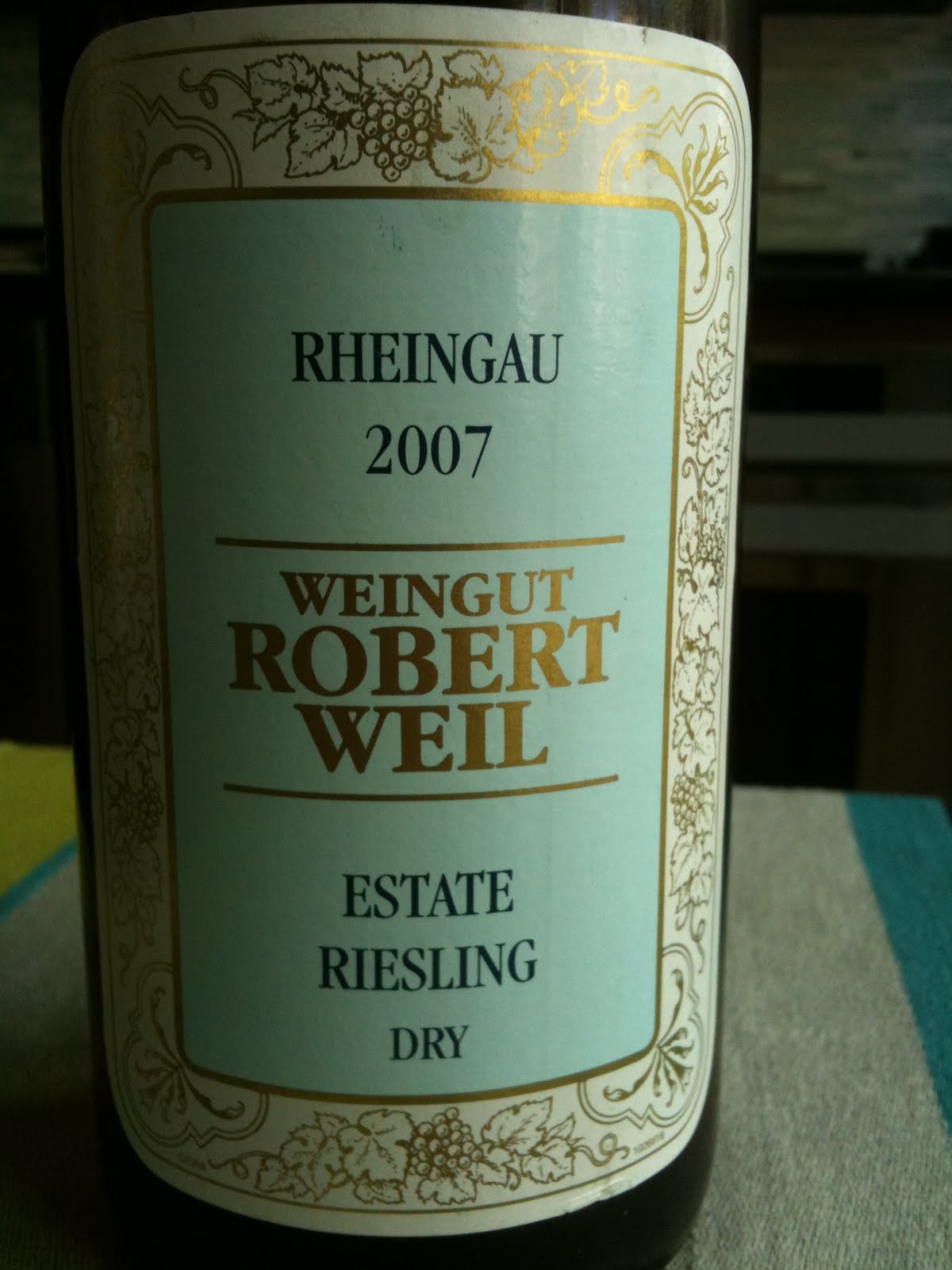
2007 Weingut Robert Weil Riesling Estate Riesling Dry -
Germany, Rheingau - 11.5%
Very light straw. Somewhat shy nose.
Lime, lemon and minerals. Dry, elegant, austere with very good acidity and green apple on the palate.
Really enjoyed it.


2006 Weingut Geschwister Schuch Niersteiner Pettenthal Riesling Kabinett - Germany, Rheinhessen - 10%
Hint of vanilla on the nose along honey and lots of tropical fruits (mango, pinapple, papaya).
Thick texture, candied pineapple on the finish. Reminds me of a Sauternes, less sweet of course.
Much less acidity compared to the other wines tasted along.


2006 Kruger-Rumpf Münsterer Kapellenberg Riesling Kabinett -
Germany, Nahe - 10%
Nice petrol notes along green apple and lime.
Off dry, rich and full body but still balanced.
A little sweeter than its peers. Simple.

2004 Dirler-Cade Riesling Bollenberg -
France, Alsace - 12.5%
Spices, peach and smoky mineral notes emerged from the nose.
A little more lemon and grapefruit on the palate. Dry, med body and balanced.
I like this wine but some strange buttery notes on the finish distract me and I would have liked a little more acidity.

My favorites were the Weil, the Franken riesling and the Dirler (save for that weird buttery note).
The 2005 Hans Wirsching was perhaps the most promising and really, in my opinion, a perfect example of what I expect and want to find in a German Riesling. Thanks Sheila for bringing those 2 Wirshings.

Overall a nice tasting. No bad wine but a few were really simple. Kind of wines you just drink without thinking about it too much and there's certainly nothing wrong with that.
The 2006 showed up a pretty big with less acidity than the 2007.
Nicest thing maybe was to see the wines showing the typicity of their regions. Always great to see a certain sense of place.
Also great to try other producers than the usual suspects (Prum Donnhoff etc...).

It would be nice if the producers could indicate the RS on the bottle. Indeed, even though you have the Kabinett mention on the label, you don't really know how sweet it is since each anbaugebiete has different levels for the different Qmp appelations. Same for Alsace. Save for Zind-Humbrecht and his stars rating, how do you know the sweetness level?